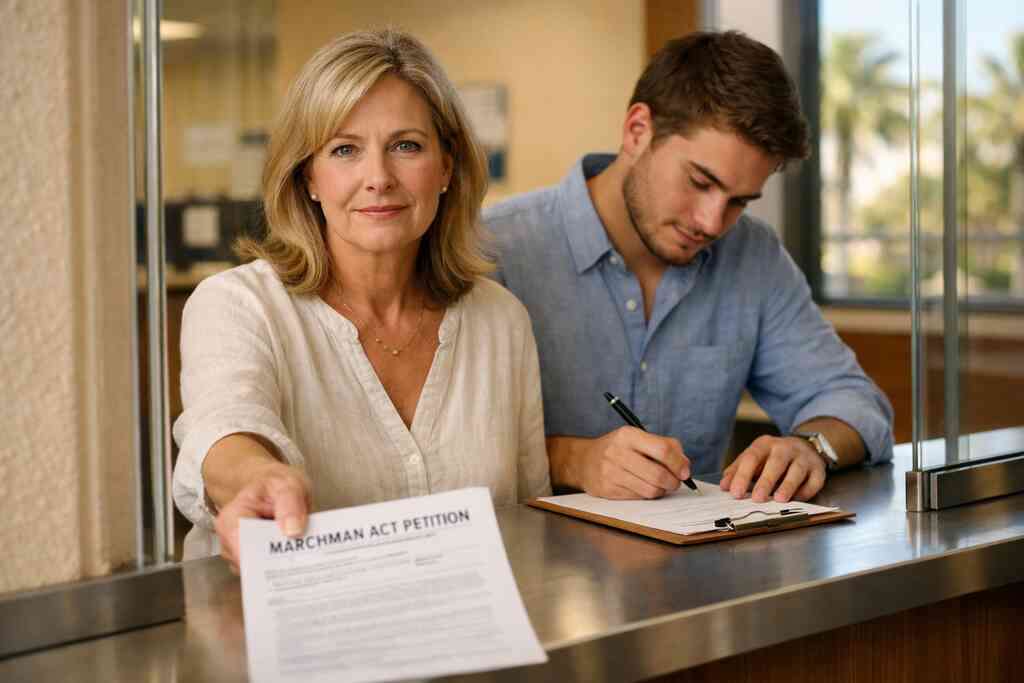
When a loved one is spiraling and the Marchman Act becomes the only path that feels left
If you are reading this at night after one more frightening call, your stomach is probably tight. That reaction makes sense. Families usually reach the Marchman Act after alcohol, drugs, fentanyl, or cocaine have stopped being the headline and the crisis has taken over. The fear is no longer abstract. It is about safety, money, work, children, and whether tomorrow will get worse.
What Florida families are seeing is often a pattern, not a single bad day. A person may vanish for hours, miss work, ignore bills, or cycle through detox and relapse. In the opioid epidemic, that pattern can turn dangerous fast, especially with fentanyl, heroin, or prescription drugs. We hear this from families in Miami-Dade, Broward, and Palm Beach almost every week. The hardest part is that love alone does not stop the spiral.
What Florida families are seeing when alcohol, drugs, fentanyl, or cocaine are no longer the real issue but the crisis is
Sometimes the substance is obvious, and sometimes it is hidden. You may notice bloodshot eyes, missed sleep, rapid mood swings, borrowing money, or repeated lies about use. You may also see a dual diagnosis picture, where mental health symptoms and substance use disorder feed each other. That is why a family intervention can feel urgent before anyone says the word “petition.” The crisis is not just the drug use; it is the loss of stability around it.
One mother in Broward described it this way: every conversation had become a fire drill. Her adult son would promise outpatient treatment, then disappear for two days. By the time she called, he was dehydrated, angry, and refusing help again. That is the moment many families start searching for how to file a Marchman Act in Florida.
Why involuntary commitment under Florida statute Chapter 397 is civil, not criminal, and why that matters
The Marchman Act sits inside Florida statute Chapter 397. It is a civil commitment process, not a criminal case. That matters because the person named in the petition is not being punished. The court is trying to address a substance use disorder emergency through treatment, assessment, and stabilization. The legal label changes the entire tone of the process.
A civil process also means rights still matter. There can be a hearing, judicial review, and attorney involvement. The court does not automatically force long-term treatment just because a family is scared. It looks for evidence, risk, and refusal of voluntary help. For a plain-English overview, many families start with the Marchman Act process in Florida.
The warning signs that can support a substance abuse assessment before anyone files a petition
Before filing, families usually need a substance abuse assessment or at least facts that support one. The court often looks for patterns such as uncontrolled use, repeated relapses, dangerous intoxication, overdose history, or an inability to care for basic needs. Refusing detox, walking out of treatment, or rejecting every reasonable offer of help can also matter. So can threats, impaired driving, or medical consequences tied to alcohol, opioids, or stimulants.
Here is the part most families miss: documentation matters more than emotion in court. Write down dates, events, texts, hospital visits, and witness names. Keep it factual. If the person has signs of psychosis, suicidal thinking, or severe confusion, that can also raise a Marchman Act vs. Baker Act question, because the legal tool may differ. If you need more detail on screening, review the Florida substance abuse assessment criteria.
Marchman Act vs Baker Act and how families in Miami-Dade, Broward, and Palm Beach usually tell them apart
Families often confuse the two, and the confusion is understandable. The Marchman Act vs. Baker Act comparison usually comes down to the main danger. The Marchman Act focuses on substance use disorder. The Baker Act focuses on a mental health crisis, such as danger from psychiatric symptoms. Sometimes both are in play, especially with dual diagnosis cases.
IssueMarchman ActBaker ActMain focusAlcohol or drug useMental health crisisGoalAssessment and treatment for substance useCrisis evaluation and psychiatric stabilizationCommon settingDetox, inpatient rehab, outpatient careCrisis stabilization unit, psychiatric evaluationTypical triggerRefusal of voluntary help plus riskDanger to self or others, or inability to care for selfIn Miami-Dade, Broward, and Palm Beach, families often tell them apart by the behavior driving the emergency. If the problem is fentanyl use, repeated intoxication, or withdrawal risk, the Marchman Act may fit. If the person is hallucinating, suicidal, or severely disorganized, the Baker Act may be the faster path. For a broader comparison, see Marchman Act vs. Baker Act in Florida.
The paper trail that turns panic into a valid Marchman Act petition in Florida
The court does not run on panic. It runs on facts, clear language, and procedural steps. That is frustrating when you are scared, but it also protects people from misuse. The petition must show more than concern. It must show why the person meets the legal standard for involuntary treatment. Families in Tampa and Orlando often tell us this is the point where the process starts to feel real.
In the cases we have reviewed this year, the biggest mistake is rushing the paperwork. People either write too little or write emotionally. The court needs specific examples of unsafe use, failed voluntary options, and present risk. If you want a practical roadmap, the how to file a Marchman Act in Florida guide can help you organize the process before you visit the clerk’s office.
Who can file a Marchman Act petition and how family members, friends, and concerned adults are usually involved
In Florida, who can file a Marchman Act petition depends on the facts and the court’s rules, so you should verify the current filing instructions in your county. In many cases, family members, spouses, guardians, and other concerned adults are involved. Friends, roommates, and sometimes professionals can also bring information forward. The key question is usually whether the petitioner has credible knowledge of the substance use and the risk it creates. If you are unsure, an attorney can help you sort out standing.
People often ask who can file a Marchman Act petition in Florida because they feel shut out by family conflict. That is common. A strained relationship does not always block a filing if the facts are strong. What matters is credible evidence and a lawful petition. If you need help identifying the right filer, start with who can file a Marchman Act petition in Florida.
What the court is actually looking for in assessment criteria, stability, risk, and refusal of voluntary help
The court wants a simple answer to a hard question: is this person likely to harm themselves or others, or keep deteriorating without treatment? Judges often look at assessment criteria such as loss of control, inability to function safely, repeated failed attempts to get help, and refusal of voluntary treatment. They also look for a connection between substance use and the current danger. A single relapse is not always enough. A pattern usually matters more.
One father in Orange County brought in a folder of screenshots, hospital discharge papers, and missed-work notices. That folder changed everything. It showed a long pattern of opioid misuse, not just a rough week. The judge did not need drama. The judge needed proof. That is why many families use a structured Marchman Act petition process in Florida instead of trying to wing it.
How to file a Marchman Act through the county court process and why the petition language matters
If you are asking how to file a Marchman Act, start with the county court where the respondent lives or is found. You typically file a sworn petition with facts, not opinions. Use dates, behavior, medical events, and failed interventions. Describe the substance involved if known, such as alcohol, cocaine, fentanyl, or prescription drugs. Keep the language plain and specific. That is what helps the court assess urgency.
Petition language matters because vague claims can stall the case. “He needs help” is not enough. “He overdosed twice, refused detox, and keeps driving after using fentanyl” gives the court something concrete. If legal drafting feels overwhelming, an attorney for Marchman Act cases can help. You can also review what to know about Marchman Act petition steps in Florida before filing.
What an ex parte order hearing and judge review can look like when the court moves quickly
Sometimes the court moves quickly, especially when safety is urgent. An ex parte order means the judge may review the petition without the other person present at that moment. That does not remove due process. It just allows the court to act fast when the paperwork supports immediate concern. The judge may then set a hearing or direct further action. 
This is where many families feel the most anxious. They want certainty, but the legal process is careful by design. The judge reviews the facts, the risk, and whether the petition meets the standard for involuntary treatment. If the person is in immediate danger, the court may authorize temporary detention for evaluation. For more on the courtroom side, see Marchman Act hearing rights in Florida in 2026.
Where detention, detox, inpatient rehab, outpatient care, and crisis stabilization can fit after filing
After filing, the next step is not always the same. Some people need detox first because withdrawal can be medically dangerous. Others may move into inpatient rehab, outpatient care, or a crisis stabilization unit depending on the facts. Florida treatment settings should match the level of risk, not just the family’s hope. That is where clinical placement becomes just as important as the petition. If you are trying to understand where the person may go, think in layers. Detox handles withdrawal and immediate medical risk. Inpatient rehab offers structure and separation from triggers. Outpatient treatment can work when the person is stable enough to return home. For placement ideas, browse involuntary rehab options in Florida and county-specific resources if the local court wants a fast plan. ### How rights, attorney review, and due process protect the person named in the petition
A Marchman Act case can feel harsh from the outside, but the law builds in protections. The person named in the petition has rights, including notice, hearing protections, and the chance to be heard. An attorney can review the petition, challenge weak facts, and help make sure the process stays lawful. That is important because involuntary treatment is serious. It should never be careless.
Florida families often ask if this means the person loses all control. The answer is no. The law tries to balance urgent care with civil rights. That balance is why good petitions succeed more often than emotional ones. If you want a deeper rights overview, review Florida involuntary treatment rights in 2026.
What happens after filing when the real work shifts from court paperwork to treatment placement
The filing is only the handoff. After that, the real work becomes matching the person to the right level of care and keeping momentum. The court can create access, but treatment still has to fit the clinical picture. This is where ASAM placement, medications, insurance, and county resources start to matter. Families in Hillsborough, Miami-Dade, and Palm Beach often discover that the legal win is only useful if the treatment bed is real.
Here is what almost no online guide mentions: the fastest legal path can still stall if no placement is ready. That is why treatment planning should begin before the hearing whenever possible. If you are coordinating with Marchman Act Addiction Treatment, ask about the likely next step right away. It saves time, and it reduces the chance that the person sits in limbo after court action.
How ASAM criteria help match a person to detox, inpatient rehab, outpatient, or dual diagnosis care
ASAM criteria help determine the right level of care. They look at withdrawal risk, safety, relapse potential, mental health needs, and recovery environment. A person who is medically fragile may need detox. A person with repeated relapse and unstable housing may need inpatient rehab. Someone with support at home and lower acute risk may do better in outpatient treatment.
This is especially important for dual diagnosis cases. Substance use and mental health do not always separate neatly. Anxiety, depression, trauma, or psychosis can change the level of care. Using assessment criteria helps avoid sending someone to the wrong setting. The right fit does not guarantee success, but it improves the chance that treatment can actually start.
Why medication-assisted treatment like naltrexone or buprenorphine may be part of the recovery plan
For opioid use disorder, medication-assisted treatment can be part of care. Buprenorphine can reduce cravings and withdrawal. Naltrexone may help prevent relapse for some patients after detox. These medications are FDA-approved and widely discussed in addiction medicine. They are not a shortcut. They are clinical tools.
Families sometimes worry that medication means “less real” recovery. That is a myth. In many cases, medication helps stabilize a person enough to participate in therapy, counseling, and relapse prevention. The right medication depends on history, timing, and medical evaluation. If opioids, fentanyl, or prescription drugs are involved, treatment planning should include this conversation early.
How insurance, Medicaid, Medicare, private pay, and county resources can change what happens next
Cost can shape the path quickly. Insurance, Medicaid, Medicare, and private pay all affect placement options. Some plans cover parts of detox, inpatient rehab, or outpatient services, but benefits vary. The court process itself is separate from treatment billing, so do not assume a filing solves the financial side. Ask before the placement window closes.
County resources can also fill gaps. Florida DCF, community behavioral health programs, and SAMHSA treatment locator tools may help identify support. In some cases, the family has to combine insurance with county referrals. That is common in real life. It is not a failure. It is just how the system works.
When county-specific support in Orange, Hillsborough, Tampa, Orlando, Jacksonville, or other Florida areas becomes the practical next move
Local logistics matter. A family in Orange County may face different coordination than one in Hillsborough or Broward. Tampa and Orlando often have different referral patterns than Jacksonville. Miami-Dade can move differently than a smaller county court. Local resources, transportation, and bed availability can decide what happens next more than the legal theory does.
If you are stuck, start local. Call the county resource line, ask about current detox openings, and identify a nearby treatment center. Then line up the court paperwork with the clinical plan. For county-specific help, use Marchman Act help in Orange County or nearby county pages if that is where the case is centered.
What families should do if the petition stalls, if the court denies it, or if voluntary treatment becomes possible
Sometimes the petition stalls. Sometimes the court denies it because the facts are thin. Sometimes the person suddenly agrees to treatment after hearing about the petition. None of those outcomes means the effort was wasted. They mean you need the next move. Keep the documentation, keep the treatment contacts, and keep the pressure calm but consistent.
If voluntary treatment becomes possible, take it seriously and move quickly. Beds disappear. Motivation changes. A stable outpatient plan can be a bridge if the person is medically safe. If the petition fails and danger remains, ask an attorney about refiling or alternatives to Marchman Act relief. The practical goal is not the paperwork. It is getting the person into care before the window closes.
How to choose the next legal or clinical step that keeps momentum toward long-term recovery
The next step should match the risk, not the emotion. If there is medical danger, push detox. If the person is unstable with co-occurring disorders, ask about dual diagnosis treatment. If the person needs legal support, use an attorney network familiar with involuntary treatment. If the issue is local bed access, use county resources fast. Small delays can turn into large setbacks.
A good rule is simple. Move from legal action to clinical placement without a pause. Keep one folder with the petition, hospital notes, assessment facts, and insurance details. Then pick one contact to make today. You do not have to figure out every layer at once, and you do not have to do it alone. If the next move is unclear, reach out to MarchmanAct.com and ask for help turning the legal process into a real treatment plan.
Frequently Asked Questions
Question: What is the Marchman Act Florida legal process, and how does MarchmanAct.com help families who need to file a Marchman Act petition?
Answer: The Marchman Act Florida process is a civil commitment procedure under Florida statute Chapter 397 that can be used when a person has a substance use disorder and refuses voluntary help. It is not a criminal case, and it is not meant to punish anyone. Instead, it is designed to connect a person to assessment, stabilization, detox, and treatment when there is a serious addiction crisis involving alcohol, drugs, opioids, fentanyl, cocaine, heroin, or prescription drugs. MarchmanAct.com helps families understand how to file Marchman Act paperwork, what facts matter in a petition, and how to move from court action to a real treatment plan. The team is experienced with involuntary treatment cases and can help families coordinate the next step toward inpatient rehab, outpatient care, or another appropriate level of support based on the situation.
Question: Who can file a Marchman Act in Florida, and what kind of evidence should be included in the petition?
Answer: In many Florida cases, family members, spouses, guardians, and other concerned adults may be involved in filing, but who can file a Marchman Act can depend on county procedures and the facts of the case. The strongest petitions usually include specific examples, not just general concern. Useful details may include dates, overdose events, missed work, refusal of detox, repeated relapse, dangerous behavior, or signs that the person cannot care for basic needs. Documentation is often more persuasive than emotion alone. MarchmanAct.com helps families organize those facts into a clear petition and understand the substance abuse assessment criteria courts often look for. If dual diagnosis, mental health concerns, or Baker Act comparison issues are present, the team can also help families think through which legal pathway may better fit the crisis.
Question: How long does the Marchman Act last, and what happens after the judge reviews the petition or issues an ex parte order?
Answer: How long the Marchman Act lasts can vary depending on the court’s order, the facts of the case, and what treatment is needed. Because this is a legal process, a judge may review the petition, and in urgent situations an ex parte order may allow the court to act quickly when the paperwork supports immediate risk. After that, the person may be directed to evaluation, stabilization, or a hearing where the court decides the next step. The goal is not to hold someone forever; it is to create access to involuntary treatment when safety is at stake and voluntary options have failed. MarchmanAct.com helps families understand the hearing, the rights involved, and how to move from the petition stage into detox, crisis stabilization unit placement, or another clinically appropriate setting.
Question: What is the difference between Marchman Act vs Baker Act, and when should a family choose one over the other in Miami-Dade, Broward, or Palm Beach?
Answer: The Marchman Act vs Baker Act comparison usually comes down to the primary crisis. The Marchman Act is used for substance use disorder and involuntary commitment related to alcohol or drug addiction, while the Baker Act is generally used for a mental health emergency where the person may be a danger to self or others or unable to care for themselves because of psychiatric symptoms. In Miami-Dade, Broward, Palm Beach, Orange, Hillsborough, Tampa, Orlando, and Jacksonville, families often face cases where both substance use and mental health are involved. In those dual diagnosis situations, it is important to identify the main driver of the emergency before filing. MarchmanAct.com helps families think through the difference, understand when assessment criteria point toward one process or the other, and avoid delays that can happen when the wrong legal path is chosen.
Question: Does insurance cover Marchman Act treatment, and what options exist if a family needs detox, inpatient rehab, or outpatient support after filing?
Answer: Insurance coverage for Marchman Act-related treatment can depend on the plan, the level of care, and the provider network. Medicaid, Medicare, private pay, and other coverage arrangements may all affect what happens after filing. The legal filing itself is separate from treatment billing, so families should not assume the court process automatically solves the financial side. After a petition, a person may need detox first if withdrawal is medically risky, or they may move into inpatient rehab, outpatient treatment, or dual diagnosis care depending on ASAM criteria and the clinical assessment. MarchmanAct.com helps families understand how to connect the legal process with real placement options, including county resources, Florida DCF support, and SAMHSA treatment locator tools when needed. The goal is to reduce delays and keep momentum toward long-term recovery.
Question: What are the alternatives to Marchman Act if the petition stalls or voluntary treatment becomes possible before the hearing?
Answer: Alternatives to Marchman Act can include voluntary treatment, a family intervention, outpatient services, crisis stabilization unit placement, or another legal or clinical option depending on the facts. If the petition stalls or the court denies it because the evidence is not strong enough, that does not mean the situation is over. Families can keep documentation, continue working with an interventionist or treatment professional, and move quickly if the person agrees to help. If the person is medically stable enough, an outpatient plan may be a bridge; if the risk is higher, detox or inpatient rehab may be more appropriate. MarchmanAct.com supports families through these next steps by helping them transition from crisis to a practical treatment plan without losing time. Their focus is on saving a life from addiction by matching the legal process with the right clinical response in Florida.