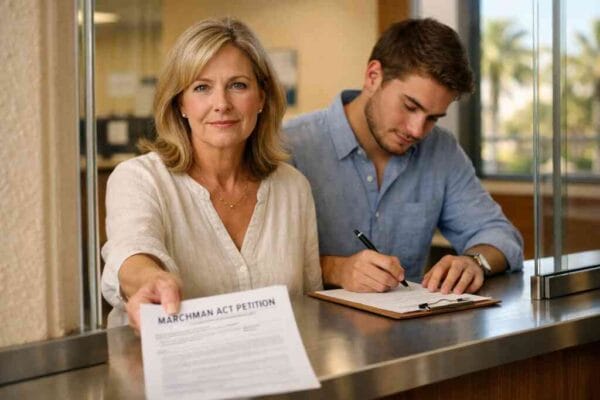
When a Loved One Is Spiraling Fast and the Marchman Act Becomes the Only Real Option
Last night, your family may have watched the same pattern repeat again: a missed shift, a locked bedroom, another promise that sounded sincere and dissolved by morning. If that feels painfully familiar, take a breath. This part is hard, and families usually wait longer than they should because hope keeps arguing with reality.
The red flags families in Florida often miss before the addiction crisis turns dangerous
The earliest warning signs rarely look dramatic. They often look like excuses, secrecy, money problems, sleep changes, or a growing stack of unanswered calls. You may notice alcohol hidden in plain sight, or prescription drugs disappearing faster than they should. You may also see fentanyl, cocaine, or heroin taking over a life faster than anyone expected.
The mistake we see most often is timing. Families keep waiting for a “better moment,” but addiction rarely creates one. If someone is missing work, driving impaired, neglecting children, or disappearing for hours, the situation may already be urgent. In Florida, those patterns can matter when you are considering a petition under the Marchman Act.
How alcohol, opioids, fentanyl, cocaine, heroin, and prescription drugs change the urgency
Different substances change the risk profile in different ways. Alcohol can trigger withdrawal dangers, blackouts, and repeated relapses. Opioids and fentanyl raise overdose concerns, while cocaine and heroin can drive impulsive, chaotic behavior. Prescription drug misuse can be quieter, but it still destroys judgment and stability.
Families in Tampa, Orlando, and Jacksonville often ask the same question: “How serious is serious enough?” The answer depends on danger, not shame. If the person cannot reliably care for themselves or stop using, urgency rises quickly. A short delay can become a medical emergency.
Why this is a civil commitment process and not a guarantee of treatment or recovery
Here is the part most families miss. The Marchman Act is a civil commitment process under Florida statute Chapter 397, not a promise of recovery. It can create a legal path toward evaluation, stabilization, and treatment. It cannot force insight, motivation, or lasting change.
That is why you should think of it as a bridge, not a finish line. A judge may review evidence and order involuntary treatment if legal criteria are met. Still, the outcome depends on the facts, the court process, and what treatment can safely begin. If you want a clearer starting point, review the Marchman Act Florida tips for families that people often search for when panic first sets in.
What Actually Makes Someone Qualify for Florida involuntary commitment under Chapter 397
Families often think the law turns on frustration. It does not. Courts look for legal criteria tied to substance use disorder, current harm, and the person’s inability to make safe decisions. That is why a careful assessment criteria review matters so much before anyone files.
The assessment criteria courts look for when substance use has crossed into self-neglect
Under Florida involuntary commitment rules, the court usually looks for evidence that substance use has caused loss of control and real harm. That can include self-neglect, repeated intoxication, refusal of care, or an inability to protect oneself. It may also include danger to others, but the standard is not simply “bad behavior.” It is about whether the person needs treatment and cannot safely seek it.
Families sometimes hear that a loved one “has to hit rock bottom.” That is not the legal test. The legal process focuses on current impairment and risk. If the person’s use is disrupting daily life, safety, and medical stability, a Marchman Act case may be worth exploring.
How dual diagnosis and mental health concerns can complicate Marchman Act decisions
Dual diagnosis changes everything. A person may struggle with addiction and mental health at the same time, and the symptoms can blur together fast. Depression, psychosis, trauma, and anxiety can all make substance use look worse, or vice versa. In those cases, families should not guess.
A Florida dual diagnosis treatment in involuntary care review can help you see the overlap more clearly. Sometimes the Marchman Act fits. Sometimes a Baker Act comparison is necessary first. The key is matching the legal tool to the immediate risk, not the family’s frustration.
What stabilization means after crisis and why detox or crisis stabilization may be considered
Stabilization means reducing immediate danger so the next decision is safer. That may involve detox, medical monitoring, or a crisis stabilization unit. It is not the same thing as completing rehab, and it should not be treated that way. It is the point where the body and mind can begin to settle.
Families often expected a single placement to solve everything. It rarely works like that. Some people need detox first. Others need inpatient rehab, then outpatient care. If you are trying to understand the path, the Florida Marchman Act process from petition to treatment is a useful reference.
Who Can File a Marchman Act petition and when family intervention is not enough
A family intervention can open the door. Sometimes it cannot get the person through it. That is where legal standing matters. If the crisis is moving faster than conversation, you may need to understand who can file a Marchman Act petition in Florida.
Which relatives, caregivers, and other qualified adults usually have standing to act
People often assume only a parent can act. That is not always true. In practice, spouses, adult family members, caregivers, and other qualified adults may be able to file, depending on the facts and the court. Florida law is specific, so you should not rely on rumor or internet advice.
If you are unsure, ask a Florida attorney or addiction legal advocate early. The wrong assumption can cost precious time. Families in Miami-Dade and Broward often move quickly because local pressure is intense and the court calendar can be unforgiving. A good attorney for a Marchman Act case in Florida search can save hours.
When an interventionist can help the family prepare a stronger case for the court
An interventionist is not a shortcut, and that matters. The right interventionist can help you document patterns, organize witnesses, and plan a safer family conversation. That becomes especially useful when the person has already rejected informal help. It also helps when emotions are running so high that no one is hearing anyone else.
One family we spoke with had three relatives sending different messages: one begged, one threatened, and one paid bills they could not afford. After they worked with an interventionist, they created one clear plan, one timeline, and one evidence packet. That kind of structure can make a court filing much stronger.
Why the wrong timing can delay help for someone in a serious substance use disorder spiral
Timing can help or hurt. If you file too early, you may lack enough evidence. If you wait too long, the person may overdose, disappear, or deteriorate medically. The middle ground is often painful because you are acting before everything is perfect.
That is why families should prepare before the next crisis, not during it. Keep notes. Save messages. Document missed obligations and dangerous incidents. If you need a more direct path, the how to file a Marchman Act petition in Florida guide can help you understand the process before you act.
The paper trail that can make or break a Marchman Act filing in Florida
A strong case is built on facts, not fear. Judges need a paper trail that shows the person’s substance use, the danger, and the need for involuntary treatment. That is why families should start collecting records before they are exhausted. A well-organized file can matter more than a long speech.
What documentation matters most before you start to file a Marchman Act petition
Start with the basics. Write down dates, times, and exact behaviors. Save texts, emails, voicemails, and screenshots that show use, refusal, threats, or confusion. Include any hospital notes, discharge summaries, or prior detox episodes you can lawfully obtain.
A clean timeline often helps more than emotional summaries. Courts respond to specifics. “He was acting strange” is weak. “He missed work three times, drove drunk, and texted about pills” is much more useful. If you want to understand the next stage, review the Marchman Act process from petition to treatment before filing.
How substance abuse assessment notes, police reports, texts, and witness observations support the case
A formal substance abuse assessment can be powerful when it is recent and credible. Police reports also help when there has been a welfare check, overdose response, or public disturbance. Witness statements from roommates, employers, or relatives can add weight if they are factual and specific. Text messages are often especially useful because they show the person’s own words. 
For treatment planning, those records also help clinicians use ASAM criteria more accurately. That matters because the right level of care depends on more than the substance itself. It depends on withdrawal risk, safety, mental health, and living environment. A Florida substance abuse assessment for involuntary treatment review can help families understand what to gather. ### Why families should understand ex parte order requests, judge review, and hearing preparation
An ex parte order can move a case forward quickly, but it is not automatic. A judge reviews the filing and decides whether the legal standard appears met. If the judge agrees, the court may issue an order that starts the next step in the process. If not, the petition may need more evidence.
That is why hearing preparation matters. Bring organized facts, not arguments. Know the person’s rights. Know what the court can and cannot do. If you need a plain-English explanation, the ex parte order in a Florida Marchman Act case resource is worth reading before you appear.
Marchman Act vs Baker Act what families should know before they choose the wrong path
Families often hear both terms at once, and the confusion is real. The Marchman Act and the Baker Act are both civil commitment laws, but they are not interchangeable. The wrong choice can slow help. The right one can get the person to the right court and the right clinician faster.
When the Baker Act is tied to immediate mental health danger and the Marchman Act is about substance use
The Baker Act is generally used when there is an immediate mental health danger, such as suicidal behavior or severe psychiatric crisis. The Marchman Act focuses on substance use disorder and related incapacity. If the main danger is overdose risk, intoxication, or severe addiction-driven self-neglect, the Marchman Act may be the better fit.
That distinction matters when the crisis is messy. A person can have both disorders at once. In those cases, you need to ask what is driving the immediate danger. If you are comparing the two laws, the Marchman Act versus Baker Act comparison in Florida can help clarify the differences.
How the two laws differ on rights, court process, and the kind of treatment they can trigger
Both processes involve rights, court review, and legal standards. Neither one is punishment. Both can lead to evaluation, stabilization, and treatment planning. But the path, paperwork, and clinical focus differ. A Baker Act case may route through psychiatric evaluation. A Marchman Act case is centered on addiction treatment.
Marchman ActBaker ActMain focus: substance use disorderMain focus: mental health crisisCourt role: civil commitment under Chapter 397Court role: separate mental health processTypical concern: addiction, overdose, self-neglectTypical concern: suicide risk, psychosis, dangerPossible treatment: detox, inpatient rehab, outpatient carePossible treatment: psychiatric stabilization, mental health careThat table is simple on purpose. Families need clarity fast. If your loved one’s issue is alcohol, opioids, fentanyl, cocaine, heroin, or prescription drugs, substance-use treatment may be the priority. If the crisis is psychiatric, the Baker Act may come first.
Why a Baker Act comparison matters when addiction and mental illness are happening together
This is where families get stuck. Substance use can trigger paranoia, depression, or violent behavior. Mental illness can also push someone toward self-medication. The signs overlap. So does the urgency.
That is why dual diagnosis work matters. You may need a treatment team that can handle both conditions together. If that is the case, look for detox and inpatient rehab options in Florida that can also address mental health needs. The safest plan is usually the one that matches the highest risk.
Which treatment path fits the person not just the crisis
A court order is not the same thing as treatment design. The best plan depends on the person’s condition, not just the legal result. Some people need medical detox. Others need residential care. Some can step down into outpatient support quickly. Matching the level of care is where the real work begins.
How detox, inpatient rehab, outpatient care, and long-term recovery planning differ in practice
Detox helps the body clear substances safely, especially after alcohol or opioid use. Inpatient rehab provides structure, supervision, and 24-hour support. Outpatient care allows someone to keep living at home while attending scheduled treatment. Long-term recovery planning is the part that keeps the gains from disappearing.
Many families want the strongest option because they are scared. That is understandable. But stronger is not always better if it is the wrong fit. A person with stable housing and lower withdrawal risk may not need the same level of care as someone in repeated overdose danger. For broader guidance, use court-ordered rehab in Florida resources to compare options.
Where ASAM criteria, medication-assisted treatment, naltrexone, and buprenorphine may fit
ASAM criteria help clinicians place a person in the right level of care. They consider withdrawal risk, medical status, mental health, relapse potential, and living situation. That is more useful than guessing based on appearances. A person can look “fine” and still need a higher level of support.
Medication-assisted treatment can also be crucial, especially for opioid use disorder. Buprenorphine and naltrexone are FDA-approved medications that may help reduce cravings or relapse risk. They are not magic, and they are not right for everyone. Still, in the opioid epidemic Florida families face, they can be important tools. You can read more through medication-assisted treatment in Florida with buprenorphine and naltrexone.
How insurance, Medicaid, Medicare, private pay, and county resources can affect access to care
Care is never only clinical. It is financial too. Insurance may cover parts of treatment, but coverage rules vary widely. Medicaid and Medicare can help in some situations, but access depends on the plan and the service level. Private pay options may be faster, but they are not always realistic.
County resources can fill gaps when families are out of time and out of options. That is where local knowledge matters. In Orange County, Hillsborough, and Palm Beach, the fastest placement may differ from one day to the next. If cost is part of the stress, the Marchman Act cost and insurance coverage in Florida page can help you think clearly about the next move.
The Florida county reality check that changes what families should do next
Florida is not one place when you are trying to get help quickly. Court practices, bed availability, and county resources can feel very different from Miami-Dade to Jacksonville. That reality changes how families should act. The best plan is often the fastest realistic one, not the perfect one.
Why Miami-Dade, Broward, Palm Beach, Orange, Hillsborough, Tampa, Orlando, and Jacksonville families often face different court and resource pressures
Families in Miami-Dade and Broward often face heavy volume and urgent need at the same time. In Orange County, Orlando families may have different referral patterns and bed availability. Hillsborough and Tampa families may be balancing local court speed against treatment access. Jacksonville and Palm Beach can have their own resource bottlenecks.
Here is the part many online guides miss: county pressure changes the practical answer, even when the law stays the same. A petition that looks straightforward on paper can still stall if placement options are limited. That is why local coordination matters. If you need county-specific support, the Miami-Dade County Marchman Act help page is a useful place to start.
How to use county resources and Florida DCF or SAMHSA tools without wasting precious time
Use official tools first. Florida DCF resources can help you identify service pathways. SAMHSA’s treatment locator can help you compare facilities and levels of care. County resources can also point you toward crisis stabilization units, assessments, and referral routes. These tools save time when your brain is already overloaded.
Do not spend hours on random forums. That wastes the window when action still matters. Start with one county page, one official locator, and one treatment contact. If you are in Broward, the Broward County Marchman Act help resource can help narrow the search without guessing.
When an addiction treatment center, attorney network, or involuntary rehab center listing becomes the fastest path forward
Sometimes speed matters more than anything else. If the person is disappearing, overdosing, or refusing all help, you may need a coordinated team quickly. An addiction treatment center can explain placement. An attorney network can explain the legal process. A verified involuntary rehab center listing can reduce the time you spend comparing dead ends.
Families in search mode often feel torn between hope and urgency. That tension is real. Keep the focus on safety, legality, and the next clear action. If you are ready to move, check the attorney for a Marchman Act case in Florida resource, then call a local treatment contact today.
Frequently Asked Questions
Question: What makes the Marchman Act different from the Baker Act when a Florida family is facing an addiction crisis?
Answer: The Marchman Act is a Florida civil commitment process under Florida statute Chapter 397 that focuses on substance use disorder, while the Baker Act is generally used for immediate mental health danger such as suicidal behavior, psychosis, or severe psychiatric crisis. If your loved one is struggling with alcohol, opioids, fentanyl, cocaine, heroin, or prescription drugs, the Marchman Act may be the better fit when the main concern is addiction-driven incapacity, self-neglect, or overdose risk. If mental health symptoms are the immediate danger, the Baker Act comparison becomes important. MarchmanAct.com helps families understand the Marchman Act vs Baker Act distinction so they can choose the safest and most appropriate legal path without wasting valuable time during a crisis.
Question: How do I know if my loved one may meet the assessment criteria for a Marchman Act petition in Florida?
Answer: Courts typically look for evidence that substance use has caused loss of control, danger, or inability to care for oneself. That may include missed work, repeated intoxication, driving impaired, refusing care, disappearing for long periods, or showing signs of self-neglect. A substance abuse assessment can help clarify whether the person’s condition meets the assessment criteria for involuntary treatment. Dual diagnosis can complicate the picture, especially when addiction and mental health concerns overlap. MarchmanAct.com helps families review the facts carefully, document the pattern, and understand whether the legal process for involuntary treatment may be appropriate before filing.
Question: Who can file a Marchman Act petition, and how can MarchmanAct.com help families prepare the paperwork?
Answer: In Florida, the ability to file can depend on the relationship to the person and the details of the case, so it is important not to rely on assumptions. Spouses, adult family members, caregivers, and other qualified adults may be able to act, but the exact rules should be reviewed carefully before filing. MarchmanAct.com helps families understand who can file a Marchman Act petition, what documentation matters, and how to build a stronger paper trail before going to court. That can include texts, witness observations, prior treatment records, police reports, and notes about dangerous behavior. If an ex parte order or hearing becomes part of the process, having an organized petition can make a major difference.
Question: What should families know about the Marchman Act Florida tips for families in Top 7 Marchman Act Florida Tips for Families in 2026?
Answer: The biggest takeaways are to act early, document everything, match the legal tool to the crisis, and focus on the next safe step rather than trying to solve everything at once. Families should understand that the Marchman Act is not a promise of recovery, but a civil commitment path that can help create access to evaluation, stabilization, detox, inpatient rehab, or outpatient treatment. The right plan may also involve ASAM criteria, medication-assisted treatment such as buprenorphine or naltrexone, and coordination with county resources, Florida DCF, or SAMHSA tools. MarchmanAct.com supports families across Florida with practical guidance, compassionate intervention support, and help navigating the legal process so they can move from panic to a clear plan.
Question: How long does a Marchman Act last, and does insurance cover Marchman Act treatment in Florida?
Answer: The length of a Marchman Act case and the treatment ordered can vary depending on the judge review of the petition, the facts presented, and the services recommended. Because legal requirements and treatment needs are case-specific, families should get guidance before making assumptions about timing. The same is true for the cost of involuntary rehab and whether insurance covers Marchman Act treatment. Coverage may depend on the facility, the level of care, and the person’s plan, including Medicaid, Medicare, or private pay options. MarchmanAct.com helps families understand the practical side of court-ordered rehab in Florida, including how stabilization, detox, inpatient rehab, outpatient treatment, and long-term recovery planning may fit into a real-world care path.
Question: What are the best alternatives to Marchman Act, and when should a Florida family contact an attorney or interventionist?
Answer: Alternatives to Marchman Act may include a voluntary family intervention, a substance abuse assessment, direct admission to an addiction treatment center, or crisis support through county resources when the person is willing to accept help. But if the situation is escalating fast, the person is refusing care, or there is immediate risk from drugs, alcohol, fentanyl, or overdose, it may be time to speak with an attorney for a Marchman Act case and an interventionist who understands Florida involuntary commitment. MarchmanAct.com can help families decide whether forced rehab alternatives are enough or whether the legal process under Chapter 397 is the safest next step. Their team supports families throughout Florida, including Miami-Dade, Broward, Palm Beach, Orange, Hillsborough, Tampa, Orlando, and Jacksonville, with compassionate guidance focused on saving a life from addiction.