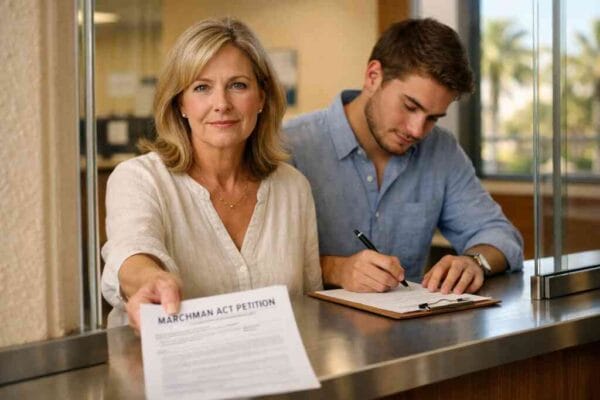
When a Florida addiction crisis crosses the line from worry to court action
A loved one is missing work, sleeping at odd hours, and brushing off every conversation. Then the calls start: another crash, another arrest, another near-overdose. If that scene feels painfully familiar, your stress is real. Families across Florida often reach a point where love alone is not enough, and that is where the Marchman Act enters the conversation. It is a civil legal tool for serious substance use disorder, not a punishment.
What families in Miami-Dade, Broward, and Palm Beach usually notice before they ever hear the words Marchman Act is a pattern. The pattern may include disappearing pills, unexplained cash loss, erratic driving, alcohol binges, cocaine use, heroin use, or fentanyl exposure. You may also see isolation, missed bills, and explosive arguments. In our experience, the hardest part is not seeing one bad day. It is watching a long slide and realizing the person keeps refusing help.
Here is what almost no online guide mentions: families usually do not need perfect proof before they act. They need credible facts, clear danger, and a realistic understanding of the legal process. In Florida, that process can involve an attorney, a judge, an ex parte order for addiction treatment in Florida, and a Marchman Act hearing. If you are reading this in a late-night panic, take a breath. The law is narrow, but it exists for moments like this.
What families in Miami-Dade, Broward, and Palm Beach usually notice before they ever hear the words Marchman Act
The first warning signs often look ordinary. A person stops answering texts, then stops showing up. Money disappears from wallets and accounts. Prescription bottles run out too fast, and there are excuses for everything. In coastal counties, families sometimes notice the signs after a weekend in South Florida turns into a week of silence. By the time they search for Miami-Dade County Marchman Act help in Florida, the crisis is already deep.
The question we get more than any other from first-time callers is simple: “Is this bad enough?” That uncertainty is completely normal. The Marchman Act is not meant for frustration alone. It is meant for situations where substance use has become dangerous and the person is refusing help, even after clear signs of harm. If you are juggling a job, two kids, and a loved one in crisis, you may feel frozen. That feeling is common, and it is exactly why clear information matters.
One parent in Broward described it this way: every conversation ended the same way, with promises that things would improve “tomorrow.” Then came the fentanyl scare. No dramatic speech changed anything, but the family finally started documenting dates, missed obligations, and overdose risk. That record later helped them understand what a substance abuse assessment would need to show.
Why repeated overdose risk, fentanyl exposure, and refusal of help can change the legal conversation
Florida’s opioid epidemic has made overdose risk impossible to ignore. Fentanyl, heroin, prescription drugs, cocaine, and alcohol can all drive a person into repeated crisis. When the same person keeps overdosing, relapsing after detox, or rejecting every referral, the legal conversation changes. The issue is no longer simple concern. It becomes a question of involuntary commitment in Florida and whether a court can order evaluation and treatment.
The law does not require families to prove a miracle. It asks whether the person has a substance use disorder and whether, because of it, they are likely to inflict self-harm, neglect basic needs, or refuse care that would stabilize them. That is why repeated naloxone reversals, emergency room visits, or threats tied to drinking or drug use matter. These facts can support a petition. They also help a judge understand the urgency.
If you are watching someone cycle through withdrawal, short sober stretches, and another relapse, that pattern can be devastating. It can also point toward the need for detox and stabilization before any longer treatment decision. Families often ask whether forced rehab in Florida is harsh. The honest answer is that the legal system sees it as a civil response to a medical and safety crisis, not a moral judgment.
How the Marchman Act fits into the bigger picture of alcohol, drugs, opioids, and dual diagnosis
The Marchman Act applies to alcohol, drugs, opioids, fentanyl, cocaine, heroin, and prescription drug misuse. It also matters when addiction and mental health collide. Dual diagnosis cases are common, and they are often more complicated because anxiety, trauma, bipolar symptoms, or depression can intensify substance use. That is why a solid substance abuse evaluation matters so much.
If the person has both mental health symptoms and substance use disorder, the Marchman Act and Baker Act may seem similar at first glance. They are not. The Marchman Act focuses on substance use. The Baker Act focuses on mental illness and immediate psychiatric danger. Families often need help sorting that out before they file anything. The wrong filing can slow everything down.
On the projects and cases we see most often, the biggest mistake is waiting for the situation to become catastrophic before asking questions. That delay can shrink options. It can also increase the odds of another overdose, arrest, or medical emergency. If you suspect dual diagnosis, mention it early. Courts, evaluators, and treatment providers need the full picture, not the cleaned-up version.
What the Marchman Act really does and who can use it without guessing wrong
The Marchman Act is Florida’s civil commitment law for substance use disorder. It is found in Florida Statute Chapter 397, which authorizes assessment, stabilization, and treatment when statutory criteria are met. It is not criminal punishment. It is not a guarantee of admission. It is a legal pathway that can require a person to be evaluated and, in some cases, treated against their will for a limited period.
This part is genuinely confusing for most people. The public often hears “court-ordered rehab Florida” or “forced rehab Florida” and imagines one fixed process. In reality, the court must examine facts, rights, and clinical needs. The statute matters. So do the person’s current behavior, the evidence in the petition, and the treatment setting that may follow. Families should treat Marchman Act help as a legal and clinical process working together.
A thoughtful petition can make the difference between a dead-end referral and actual movement. But the law still requires proof. That proof usually centers on impaired judgment, loss of control, refusal of voluntary care, and risk. If you need help understanding those standards, speak with an attorney or a treatment advocate who knows Florida involuntary commitment laws for addiction.
What Florida statute Chapter 397 says about involuntary commitment for substance use disorder
Florida Statute Chapter 397 is the backbone of the Marchman Act. It allows civil commitment for substance use disorder when the person meets legal criteria and needs intervention. The law is designed to protect the person and the public while also preserving due process. That balance matters because the court is limiting liberty, even if the goal is safety.
A judge does not act on emotion alone. The court looks for evidence that the person has lost control over substance use, is unlikely to ask for help voluntarily, and presents a real risk without intervention. The standard often connects to detox, stabilization, and clinically appropriate care. The process may begin with a petition, but it does not end there. The court can require testimony, review records, and set a hearing.
Legislative history matters here too. The Marchman Act has long been Florida’s civil tool for addiction crises, and its structure reflects a desire to intervene before tragedy. That said, it remains a limited legal remedy. It does not force recovery. It gives the system a lawful way to start evaluation and treatment when refusal has become dangerous.
Who can file a Marchman Act petition in Florida and when a family member may not be the only option
Many people assume only a spouse or parent can file. That is not always true. A family member may file, but the law also allows certain other qualified petitioners in appropriate situations. The exact filing path depends on the facts and the court’s requirements. If you want to understand who can file a Marchman Act petition in Florida, review the rules before you file.
In practical terms, family intervention is often the trigger. A mother, father, adult child, sibling, or spouse may be the person who gathers the facts. But an employer, professional, or other qualified person may sometimes be involved in the broader process. In some counties, support from county resources or an interventionist can make the petition stronger and more organized. That is especially useful when the person has already rejected multiple offers of help.
One family in Orange County came to us after three failed attempts to convince their son to enter detox. They had texts, ER discharge papers, and clear examples of missed work and dangerous drinking. Once they understood the filing requirements, the process felt less mysterious. It did not become easy. It did become actionable.
Marchman Act vs Baker Act and why mental health and addiction are treated differently under Florida law
This comparison trips up a lot of families. The Baker Act is for mental health crises that create immediate danger, while the Marchman Act addresses substance use disorder. Both are involuntary commitment laws in Florida, but they serve different legal and clinical purposes. If you are trying to decide between them, a Marchman Act vs Baker Act comparison in Florida can help you avoid filing the wrong petition. 
Marchman ActBaker ActMain focusSubstance use disorderMental health crisisTypical concernAddiction, overdose, refusal of treatmentPsychiatric danger, severe disorganizationCommon settingDetox, rehab, stabilizationCrisis stabilization unit, psychiatric evaluationLegal questionDoes substance use create danger and refusal?Does mental illness create immediate risk?The overlap is real. Someone may be using fentanyl and also showing paranoia or suicidal thoughts. In such mixed cases, the court and clinicians must decide which issue is primary and whether both laws are relevant. That is where experienced legal guidance helps. The wrong framework can waste precious time.
The rights, assessment criteria, and stabilization standards courts look for before ordering treatment
People under the Marchman Act still have rights. They have due process rights, notice rights, and the right to a hearing in many situations. They also have the right to challenge the petition and the legal basis for involuntary treatment. That is why families should never treat the process as automatic. The court must find that the standards are met before ordering treatment.
The assessment criteria usually center on current impairment, loss of control, and risk. A court may also look at ASAM criteria, which help determine the appropriate level of care. Those criteria assess withdrawal risk, medical needs, mental health concerns, relapse risk, and recovery environment. They matter because not every person needs the same setting. Some need detox. Others need inpatient rehab Florida programs. Some can stabilize in outpatient treatment Florida settings.
Stabilization is not just a buzzword. It means getting the person medically and emotionally safe enough for the next stage. That may involve crisis stabilization unit placement, supervised detox, or structured residential treatment for substance use disorder. If you are trying to understand the level of care, talk through the Florida substance abuse treatment options before assuming one path fits all.
The decision point that turns concern into next steps in Florida
Once the crisis has become a legal issue, the next question is practical: what happens now? The answer often starts with filing, moves through court review, and then turns toward treatment placement. That path can feel overwhelming. It is also where good guidance makes the biggest difference. Families do better when they understand the sequence before emotions spike again.
In Miami-Dade, Broward, Palm Beach, Orange, Hillsborough, Tampa, Orlando, and Jacksonville, families often move between phone calls, court questions, and treatment searches in the same afternoon. That is exhausting. It helps to think in categories: legal process, clinical level of care, and payment options. When those three pieces line up, the next move becomes clearer.
What we have seen in 2026 specifically is that families who act early often have more options. They are more likely to find suitable detox, more likely to coordinate a hearing, and more likely to prepare for treatment placement. Waiting rarely improves the picture. It usually adds risk.
How the ex parte order, hearing, and judge review typically fit together in the legal process
The Marchman Act process can begin with a petition asking the court to intervene. In some situations, the judge may review the filing and issue an ex parte order if the facts justify immediate action. That order can direct law enforcement or another authorized party to take the person for assessment. After that, a hearing may follow, where the judge reviews evidence and decides whether treatment should continue.
This is where the legal process for Marchman Act becomes very real. The petition is not just paperwork. It is the factual foundation for court action. A clear record of overdose scares, missed treatment attempts, refusal of help, and unsafe behavior can matter. If you want the filing details, see Marchman Act process and how to file in Florida.
A hearing can feel intimidating, especially in counties with busy dockets. But the purpose is straightforward. The judge decides whether the facts support continued involuntary treatment. A lawyer can help, and in many cases so can a trained interventionist. If the stakes are high, attorney support is often worth considering.
What treatment paths may follow including detox, inpatient rehab, outpatient care, and medication-assisted treatment
The court does not prescribe recovery in a vacuum. It usually connects the legal order to a treatment level. That level may start with detox and stabilization if the person is medically unsafe. It may move into inpatient rehab, where the person receives 24-hour structure. Or it may lead to outpatient care if the risk level is lower and the person can safely participate.
Medication-assisted treatment can be part of the plan, especially for opioid addiction treatment. FDA-approved options like buprenorphine and naltrexone are common examples. These medications are not magic. They are evidence-based tools that can reduce cravings and support stability when combined with counseling and follow-up. For some people, that combination is the difference between another spiral and a workable plan.
Treatment pathBest fitCommon useDetoxWithdrawal risk, medical instabilityEarly stabilizationInpatient rehabHigh relapse risk, unsafe home settingIntensive residential structureOutpatient careStable home, lower immediate riskOngoing therapy and monitoringMedication-assisted treatmentOpioid use disorderCraving and relapse support### When to use county resources, an attorney, or an interventionist in places like Orlando, Tampa, and Jacksonville
County resources can help when you need local direction quickly. Florida DCF resources, county mental health lines, and SAMHSA treatment resources can point you toward immediate support. In Orange County, Hillsborough County, and Duval County, those contacts can matter when beds are scarce. Families sometimes call them while also contacting a private treatment advocate. That layered approach is often smarter than waiting for one perfect answer.
An attorney is useful when the filing is contested, the facts are complicated, or the respondent has prior court involvement. An interventionist can help when the family needs structure, a calm plan, and a better chance at voluntary acceptance before filing. In Tampa and Orlando, we often see families try one round of direct conversation before moving to legal steps. That can work, but only if the risk is not immediate. If there is a recent overdose, speed matters more than persuasion.
If insurance is a concern, ask about Medicaid rehab Florida coverage, Medicare and addiction treatment limits, and private pay rehab options. Coverage questions do not disappear because a court is involved. Families often need a treatment center that can coordinate the legal and financial pieces together. If you are comparing facilities, review Florida substance abuse treatment options and county-specific support.
What to consider if you are weighing alternatives to Marchman Act and need a practical plan for long-term recovery
Alternatives to Marchman Act can make sense when the person is still receptive. A structured family intervention, a same-day assessment, or a voluntary detox admission may avoid court altogether. Some people respond better to a direct conversation when the environment is calm and the choices are concrete. Others need a firm boundary before they will accept help. You know the person best, but you should not have to guess alone.
Long-term recovery support usually includes more than one service. It may involve outpatient therapy, peer support, medication-assisted treatment, relapse prevention, and family support. SAMHSA and Florida DCF both emphasize continuity of care, not just crisis response. That means the plan after detox matters as much as the petition itself. A short stay without follow-up can leave the person right back where they started.
If you want help figuring out the right path, use a practical checklist:
- Gather dates, texts, and incident notes.
- Review the risk of overdose, violence, or self-neglect.
- Decide whether voluntary treatment is still realistic.
- Ask about legal help, county support, and insurance.
- Confirm the treatment level before filing.
You do not have to sort out every detail tonight. Start with one clear action: speak with a Florida Marchman Act professional, document the facts, and ask what path fits the current risk.
Frequently Asked Questions
Question: What is the Marchman Act Florida, and how does Florida statute Chapter 397 relate to involuntary commitment for substance use disorder?
Answer: The Marchman Act is Florida’s civil commitment law for substance use disorder, and it is governed by Florida Statute Chapter 397. It allows the court to intervene when a person’s alcohol, drugs, opioids, fentanyl, cocaine, heroin, or prescription drug use creates serious safety concerns and the person refuses voluntary help. In practice, the law can support a substance abuse assessment, stabilization, and treatment when the legal criteria are met. MarchmanAct.com helps families understand the legal process for Marchman Act cases in a compassionate, practical way, so they can move from crisis to action with less confusion.
Question: Who can file a Marchman Act petition in Florida, and what should families know before starting the how to file Marchman Act process?
Answer: In many cases, a family member, spouse, parent, adult child, or another qualified petitioner may be able to start the process, but the exact filing rules can depend on the facts and local court requirements. Before filing, it is important to gather credible information such as dates, overdose concerns, refusals of help, missed work, unsafe driving, or repeated relapses. MarchmanAct.com supports families who are trying to understand who can file a Marchman Act petition and how to file Marchman Act paperwork without guessing wrong. Their team can help you think through whether involuntary commitment in Florida is appropriate, whether an attorney should be involved, and whether county resources or an interventionist may help strengthen the case.
Question: How does the Marchman Act vs Baker Act comparison help families decide between mental health and addiction treatment in Florida?
Answer: The Marchman Act vs Baker Act comparison matters because these are two different Florida laws with different goals. The Marchman Act focuses on substance use disorder, addiction crisis intervention, and civil commitment for addiction when the primary issue is alcohol or drug misuse. The Baker Act is used for mental health crises involving immediate psychiatric danger. In dual diagnosis situations, both substance use and mental health may be involved, which can make the decision more complex. MarchmanAct.com helps families sort through these differences so they can pursue the right path, whether that means a Marchman Act petition, a Baker Act evaluation, or coordinated treatment planning that includes detox and stabilization, inpatient rehab Florida options, or outpatient treatment Florida care.
Question: What happens after a Marchman Act hearing, and how do ex parte order decisions and judge approval for treatment work?
Answer: After a petition is filed, the court may review the facts and, in some situations, issue an ex parte order if immediate action is justified. A Marchman Act hearing may follow, where a judge reviews the evidence and decides whether involuntary treatment rights are balanced against the need for safety and stabilization. If the court approves treatment, the next step may involve detox, a crisis stabilization unit, inpatient rehab, or outpatient care depending on the person’s needs and the ASAM criteria. MarchmanAct.com helps families prepare for this legal process for Marchman Act cases by explaining what evidence matters, what rights the person has, and how treatment placement may follow judge approval for treatment.
Question: Does insurance cover Marchman Act treatment, and what are the cost of involuntary rehab and payment options in Florida?
Answer: Insurance coverage can vary depending on the plan, the treatment setting, and medical necessity. Families often ask whether insurance cover rehab applies in a Marchman Act case, and the answer is usually that payment still depends on the provider, the level of care, and the specific benefits available. Medicaid rehab Florida coverage, Medicare and addiction treatment limits, and private pay rehab options may all come into play. MarchmanAct.com can help families think through cost of involuntary rehab concerns while also looking at county resources for addiction, Florida DCF resources, and SAMHSA treatment resources. Their goal is to make sure families have a realistic plan for long-term recovery, not just a short-term court order.
Question: Why should families trust MarchmanAct.com when they need help with saving a life from addiction in Miami-Dade, Broward, Palm Beach, Orlando, Tampa, or Jacksonville?
Answer: Families trust MarchmanAct.com because the team understands both the legal and clinical sides of Florida addiction crisis cases. They work with people facing alcohol addiction treatment, drug addiction treatment, opioid addiction treatment, fentanyl addiction intervention, cocaine addiction support, heroin addiction treatment, and prescription drug abuse help. They also understand that many cases involve dual diagnosis, mental health concerns, and the need for a thoughtful family intervention. Whether you are looking for attorney support, interventionist Florida guidance, or help choosing between detox, inpatient rehab, outpatient treatment, naltrexone treatment, or buprenorphine treatment, MarchmanAct.com offers compassionate direction grounded in Florida law. For families in Miami-Dade, Broward, Palm Beach, Orange, Hillsborough, Tampa, Orlando, and Jacksonville, that combination of local understanding and addiction treatment center experience can be the difference between delay and meaningful action.