
When a loved one is spiraling in Florida and the Marchman Act becomes the question nobody wanted to ask
The call usually comes late. A parent in Tampa hears a crash in the kitchen. A spouse in Orlando finds missed bills, empty bottles, and a phone full of promises that never held. By the time families in Miami-Dade or Jacksonville start searching for help, the fear is no longer abstract. It sits in the room with you. If you are reading this while worried, angry, and exhausted, that reaction makes sense.
The warning signs families in Miami-Dade, Tampa, Orlando, and Jacksonville usually notice before the crisis turns public
Families usually notice patterns before they notice a single disaster. You may see disappearing money, missed work, broken routines, or sudden secrecy around a phone. Sometimes the change is slower, like repeated withdrawals, irritability, and unexplained absences. Other times it is blunt and public, with intoxication, arrests, overdoses, or unsafe driving. The hardest part is that each sign can look small until it is not.
What we hear most often from families is this: “I knew something was wrong, but I did not know what I was looking at.” That confusion is common. In Miami-Dade, Tampa, Orlando, and Jacksonville, people often wait because they hope the next morning will be different. However, addiction crisis patterns usually deepen before they improve. A Florida Marchman Act help for families in 2026 search often begins only after that hope has been worn thin.
Why alcohol, drugs, opioids, fentanyl, cocaine, heroin, and prescription misuse can make clear thinking impossible
Substance use disorder changes judgment. Alcohol, opioids, fentanyl, cocaine, heroin, and prescription drug misuse can narrow attention until only the next dose matters. That is why families may feel they are talking to a person who is physically present, but mentally elsewhere. The brain can start treating danger as normal. That shift is terrifying, and it is real.
Here is the part most families miss. The substance does not just create bad behavior. It can also block insight, memory, and follow-through. Someone may sincerely promise to get help and still disappear by nightfall. In opioid cases, especially during Florida’s opioid epidemic, fentanyl can make the situation even more volatile because the margin for error is tiny. That is why a Marchman Act versus Baker Act comparison in Florida matters early, not after everything has already collapsed.
The point where a family intervention stops being enough and civil commitment enters the picture
A family intervention can open the door. It can also fail if the person refuses every offer, every ride, and every plan. Once safety is slipping away, families start asking about civil commitment and forced rehab. That is a heavy thought. It should be.
The Marchman Act exists for exactly this kind of crisis. It is not a punishment. It is a civil process used when substance use has become dangerous and voluntary help is not sticking. In the cases we have seen this year, the turning point is often when the family realizes love alone is not changing the pattern. At that point, a structured legal process may be more realistic than one more emotional conversation. If you need a clearer map, Marchman Act petition process in Florida step by step is the kind of resource families usually wish they had sooner.
What Marchman Act families in Florida need to understand about the law before they sign anything
The law matters because signatures matter. Families sometimes feel pressure to sign paperwork they do not fully understand. That is understandable, especially during an addiction crisis. But involuntary treatment is still a legal process, and legal process means rights, evidence, and court review. You should know what you are asking the court to do before you ask it.
How Florida statute Chapter 397 frames involuntary commitment as a civil process, not a punishment
Florida statute Chapter 397 is the core framework for the Marchman Act. It treats substance abuse intervention as civil commitment, not criminal punishment. That distinction matters because the court is not deciding guilt. The court is deciding whether the person meets legal criteria for involuntary assessment, stabilization, or treatment. That is a different standard, and it is meant to protect both safety and due process.
Families often assume “court-ordered rehab” means the judge can simply send someone anywhere. That is not how it works. The court follows statutory criteria and looks at evidence. The person also keeps important rights in involuntary treatment, including notice and a hearing in many cases. If you want a plain-language overview of what the Florida Marchman Act means for involuntary addiction treatment actually involves, that is the right starting point.
What assessment criteria and substance abuse assessment requirements are supposed to show the court
The court usually wants evidence that the person has a substance use disorder and has lost control in a way that creates danger or severe impairment. That is where a substance abuse assessment becomes important. Assessment criteria often look at frequency of use, failed attempts to stop, withdrawal, safety risks, and whether the person can understand the need for care. In practice, the assessment should help the court understand the level of risk, not just the family’s frustration.
A strong assessment is not a moral judgment. It is clinical evidence. In Florida, courts often rely on documentation that aligns with ASAM criteria, because the level of care should match need. The most useful assessments describe recent behavior, treatment history, and why a lower level of care has not worked. If you need the details, what a Florida substance abuse assessment includes is the kind of guide families usually need before filing anything.
Where the Marchman Act and Baker Act split apart when mental health and addiction overlap
This is where many families get stuck. The Marchman Act vs Baker Act question comes up when addiction and mental health are both visible. The Baker Act focuses on mental health crises and imminent danger related to mental illness. The Marchman Act focuses on substance use disorder and the need for assessment or treatment. They can overlap, but they are not interchangeable.
A person with dual diagnosis may need both addiction treatment and mental health care. Still, the legal route depends on what crisis is driving the emergency. If intoxication, withdrawal, or chronic substance misuse is the main issue, the Marchman Act may fit better. If psychosis or suicidal danger is the main issue, the Baker Act may be more appropriate. A careful Florida Marchman Act and Baker Act differences review can save families from choosing the wrong path.
The paper trail that moves a Marchman Act case from panic to petition
The paper trail matters because panic is not enough for court. A judge needs a petition, supporting facts, and a lawful request. Families often think the process begins with a dramatic confrontation. In reality, it often begins with paperwork, dates, observations, and a sober description of risk. That feels cold when your heart is racing, but the structure is what makes action possible.
Who can file a Marchman Act petition in Florida and why standing matters
Who can file a Marchman Act petition in Florida depends on the situation and the legal standing required by the statute. In many cases, family members, guardians, or other qualified petitioners may file if they can show the needed facts. Standing matters because the court needs a proper petitioner, not just a worried observer. That is one reason families should not guess.
We hear this question every week: “Can I file if my adult child refuses help?” Often, the answer depends on your relationship, the facts you can document, and the relief you are asking for. A who can file a Marchman Act petition in Florida resource can help you sort that out before you spend energy on the wrong form. If you are collecting records and messages now, keep them organized. Dates matter.
What an ex parte order can mean for a crisis that cannot wait
An ex parte order can matter when a crisis cannot wait for a full hearing. In plain terms, it means a judge may review the petition without the other side present if the facts support urgent action. That does not erase rights. It simply addresses time-sensitive danger. Families often feel relief and fear at the same time, and that reaction is normal. 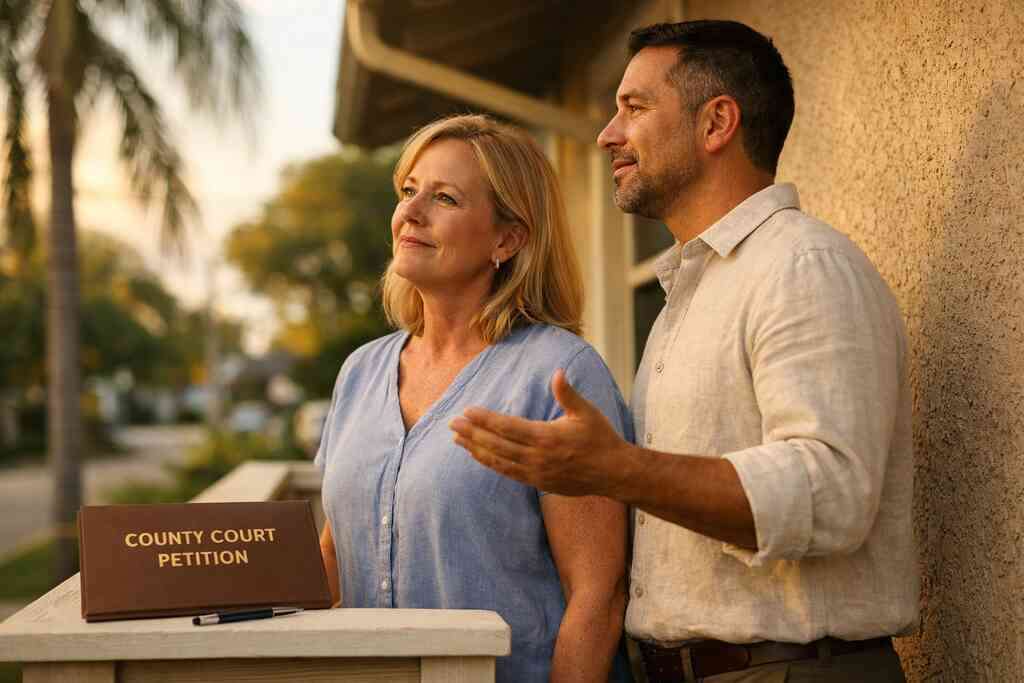
One family we worked with had repeated late-night calls, stolen car keys, and a near-overdose in the same week. They were certain another day would bring another emergency. The ex parte route gave them a faster legal path, but it still required precise facts and careful filing. That is why you should treat this as a legal process, not just a crisis reaction. If you need help understanding the filing path, how to file a Marchman Act in Florida step by step is the practical guide families often need.
How a hearing before a judge fits into the legal process for rehab and what rights still remain
A hearing before a judge is not a formality. It is where the court weighs evidence and decides whether involuntary treatment is legally justified. The person has rights, and those rights matter even during a family emergency. That includes notice, the chance to be heard, and the ability to challenge facts. Judges do not want guesses. They want evidence.
Families in Broward and Palm Beach often ask whether the hearing guarantees treatment. It does not guarantee a specific program or a specific result. It authorizes legal action if the standard is met. That distinction protects due process and keeps the system civil rather than punitive. For a detailed breakdown of Marchman Act hearing rights and judge decisions in Florida, it helps to read the court side before you file.
Why stabilization is not the same thing as treatment and what happens after the court acts
This is the part almost no online guide explains well. Stabilization is not the same thing as treatment. It can stop immediate danger. It cannot, by itself, build long-term recovery. Families often celebrate a short admission, then feel crushed when the larger problem is still there. That gap is real.
What detox, crisis stabilization units, and inpatient rehab are designed to do in the short term
Detox is usually the acute medical phase. A crisis stabilization unit can help with immediate safety, observation, and withdrawal management. Inpatient rehab may follow when the person needs structure, supervision, and separation from triggers. These are short-term tools. They are not the whole answer.
Here is what families need to hear plainly. A person can look calmer after detox and still be at serious risk if the underlying pattern is untouched. In several Florida counties, families have been surprised by how quickly a person returns to use after discharge when no continuing plan is in place. If you are comparing levels of care, addiction treatment options in Florida for court-ordered rehab can help you understand the difference between containment and recovery.
When outpatient care, ASAM criteria, and dual diagnosis treatment may be more appropriate than forced rehab
Not every case calls for inpatient placement. ASAM criteria can point toward outpatient treatment, intensive outpatient care, or a different level of support. That may be especially true when the person is medically stable, motivated, and able to engage. Dual diagnosis treatment also matters when anxiety, depression, trauma, or another mental health condition is driving relapse risk. The right level of care should fit the person, not the family’s fear alone.
A Tampa family once told us they expected residential treatment to be the only answer. After assessment, outpatient care with close monitoring made more sense because the person was working, medically stable, and willing to attend regularly. That choice saved time and avoided unnecessary disruption. The mistake we see most often is assuming “more restrictive” always means “better.” It does not. For level-of-care questions, what a Florida substance abuse assessment includes is still the anchor.
How naltrexone, buprenorphine, and medication-assisted treatment fit into recovery planning for substance use disorder
Medication-assisted treatment can be part of a serious recovery plan. Naltrexone and buprenorphine are FDA-approved options that may help certain patients with opioid use disorder, depending on clinical needs. These medications do not replace therapy, structure, or accountability. They can support stability, reduce cravings, and improve engagement in treatment. That is especially important in fentanyl and heroin cases.
Families sometimes worry that medication-assisted treatment is “just replacing one drug with another.” That is a common fear, but it is too simplistic. Clinical medicine treats substance use disorder as a health condition, not a character flaw. A thoughtful plan may combine medication, counseling, monitoring, and family support. When courts and treatment teams coordinate well, the goal is safer engagement, not quick symbolism. That is why Florida Marchman Act help for families in 2026 should include a discussion of recovery planning, not only filing papers.
The next move families make after the petition is filed should be practical, not vague
Once the petition is filed, families need logistics. They need to know who pays, where the person may go, and what happens next. Vague advice helps no one here. Concrete questions do. If you are already in motion, stay practical and write down every answer you get.
How insurance, Medicaid, Medicare, and private pay can affect access to treatment and what families should ask first
Insurance coverage for rehab can be complicated, especially under involuntary treatment. Medicaid, Medicare, and private pay plans all have different rules, and coverage can depend on the treatment setting. Families should ask what is covered, what requires authorization, and whether detox or inpatient rehab is included. Do not assume a court order automatically changes coverage. It usually does not.
Ask these questions first:
- Is the facility in-network?
- Does the plan cover detox and stabilization?
- Is prior authorization required?
- What happens if the person is uninsured?
- Are payment plans or county resources available?
If you are comparing coverage, remember that the cost of involuntary rehab is not one fixed number. It varies by setting, length, and payer source. Many families also ask about Medicaid, Medicare, and private pay options after they learn a court order is not a blank check. That is normal. It is also why Florida Marchman Act help in Miami-Dade County and nearby county pages can be useful when local resources matter.
Where county resources and Florida DCF guidance may help in places like Broward, Palm Beach, Orange, Hillsborough, and other local courts
County resources can make a difficult process less chaotic. Broward, Palm Beach, Orange, and Hillsborough all have local realities, and families often need region-specific guidance. Florida DCF guidance can also help families understand service pathways and public resources. In some places, the county court clerk or local treatment network may be part of the practical picture. That local layer matters more than people expect.
In Orlando and Tampa, families often ask where they can turn if the person refuses to go voluntarily after filing. In Jacksonville, families may need help locating available assessments or detox access quickly. The answer often depends on local capacity and current county resources. If you want county-specific support, Marchman Act help in Broward County and Marchman Act help in Orange County can point you toward location-aware help without guessing.
When to contact an attorney, interventionist, or addiction treatment center and how to decide between filing, getting legal help, or exploring alternatives to the Marchman Act
Some families should file. Some should consult an attorney first. Some need an interventionist and a treatment center before filing makes sense. The right choice depends on safety, cooperation, and the quality of evidence you have. If the person is dangerous, unreachable, or repeatedly overdosing, delay can be costly. If the person is willing but overwhelmed, an alternative may work better than involuntary treatment.
A good attorney can explain rights, deadlines, and court expectations. An experienced interventionist can help structure the conversation before it explodes. An addiction treatment center can review levels of care, detox needs, and whether inpatient rehab or outpatient support fits best. If you are comparing choices, who can file a Marchman Act petition in Florida and Marchman Act help in Hillsborough County are both useful places to sort out next steps. You do not have to solve every part tonight. Start by getting the facts right, then call one qualified resource and ask direct questions.
Frequently Asked Questions
Question: What does the Marchman Act mean for Florida families facing an addiction crisis in 2026?
Answer: The Marchman Act is Florida’s civil commitment process for people with substance use disorder who need assessment, stabilization, or treatment and are unable or unwilling to seek help voluntarily. For families in Miami-Dade, Broward, Palm Beach, Orange, Hillsborough, Tampa, Orlando, and Jacksonville, it can be a legal option when alcohol, drugs, opioids, fentanyl, cocaine, heroin, or prescription drug misuse has created serious safety risks. MarchmanAct.com helps families understand whether the situation fits Florida statute Chapter 397, what rights still apply in involuntary treatment, and whether court-ordered rehab may be appropriate. Their team focuses on compassionate guidance so families can make informed decisions instead of reacting out of panic.
Question: How do I know if I should file a Marchman Act petition or consider alternatives to the Marchman Act?
Answer: That depends on safety, the level of substance use, and whether the person is willing to accept help. If a loved one is repeatedly overdosing, disappearing, driving impaired, refusing treatment, or showing clear signs that substance abuse is affecting judgment, a Marchman Act petition may be worth exploring. If the person is cooperative, medically stable, or needs a different level of care, alternatives to the Marchman Act such as family intervention, outpatient treatment, or an addiction treatment center assessment may be more appropriate. MarchmanAct.com helps families think through these options carefully, including when a substance abuse assessment, ASAM criteria review, or dual diagnosis treatment plan might be a better fit than forced rehab. They can also help you understand how insurance, Medicaid, Medicare, or private pay may affect the next step.
Question: Who can file a Marchman Act petition in Florida, and what is the petition process like?
Answer: Who can file a Marchman Act petition in Florida depends on the legal standing allowed under the law and the facts of the situation. In many cases, family members or other qualified petitioners may be able to file if they can document the need for involuntary treatment. The petition process usually involves preparing a factual petition, submitting evidence of dangerous substance use or inability to make safe decisions, and waiting for a judge to review the request, sometimes through an ex parte order in urgent situations. MarchmanAct.com helps families understand how to file a Marchman Act, what evidence matters, and what to expect at a hearing before a judge. Their guidance is especially helpful when families need to move quickly but still want to follow the legal process for rehab correctly.
Question: What happens after a court order, and how do detox, stabilization, and inpatient rehab fit into recovery?
Answer: A court order does not automatically mean long-term recovery is solved. In many cases, the first step is detox or a crisis stabilization unit to manage immediate risk and withdrawal safely. After that, a person may move into inpatient rehab, outpatient treatment, or another level of care based on ASAM criteria and clinical needs. MarchmanAct.com helps families understand that stabilization is short-term support, not the full recovery plan. They also explain how medication-assisted treatment options like naltrexone and buprenorphine can fit into a broader plan for opioid use disorder, especially in fentanyl or heroin cases. Their team works to connect families with practical next steps so the legal process supports long-term recovery instead of stopping at temporary crisis control.
Question: What should families know about the blog What MarchmanAct.com Families Need To Know In Florida 2026 and getting help in places like Miami-Dade, Broward, Palm Beach, Orange, Hillsborough, Tampa, Orlando, and Jacksonville?
Answer: The blog What MarchmanAct.com Families Need To Know In Florida 2026 is designed to help Florida families understand the Marchman Act, the Baker Act comparison, civil commitment, and the practical steps involved in seeking involuntary treatment. It walks families through warning signs, assessment criteria, ex parte orders, hearings, and the difference between stabilization and long-term care. MarchmanAct.com also recognizes that local county resources matter, which is why families in Miami-Dade, Broward, Palm Beach, Orange, Hillsborough, Tampa, Orlando, and Jacksonville may need region-specific support when looking for an addiction treatment center, court guidance, or recovery services. Their approach is compassionate, knowledgeable, and focused on saving a life from addiction while helping families make sense of legal options, insurance questions, and the next best step.